Need roof repair in Stamford?
- Request an estimate in a few minutes
- No obligation to hire
- Independent local providers
- Plain answers
No obligation
Request your roof repair estimate
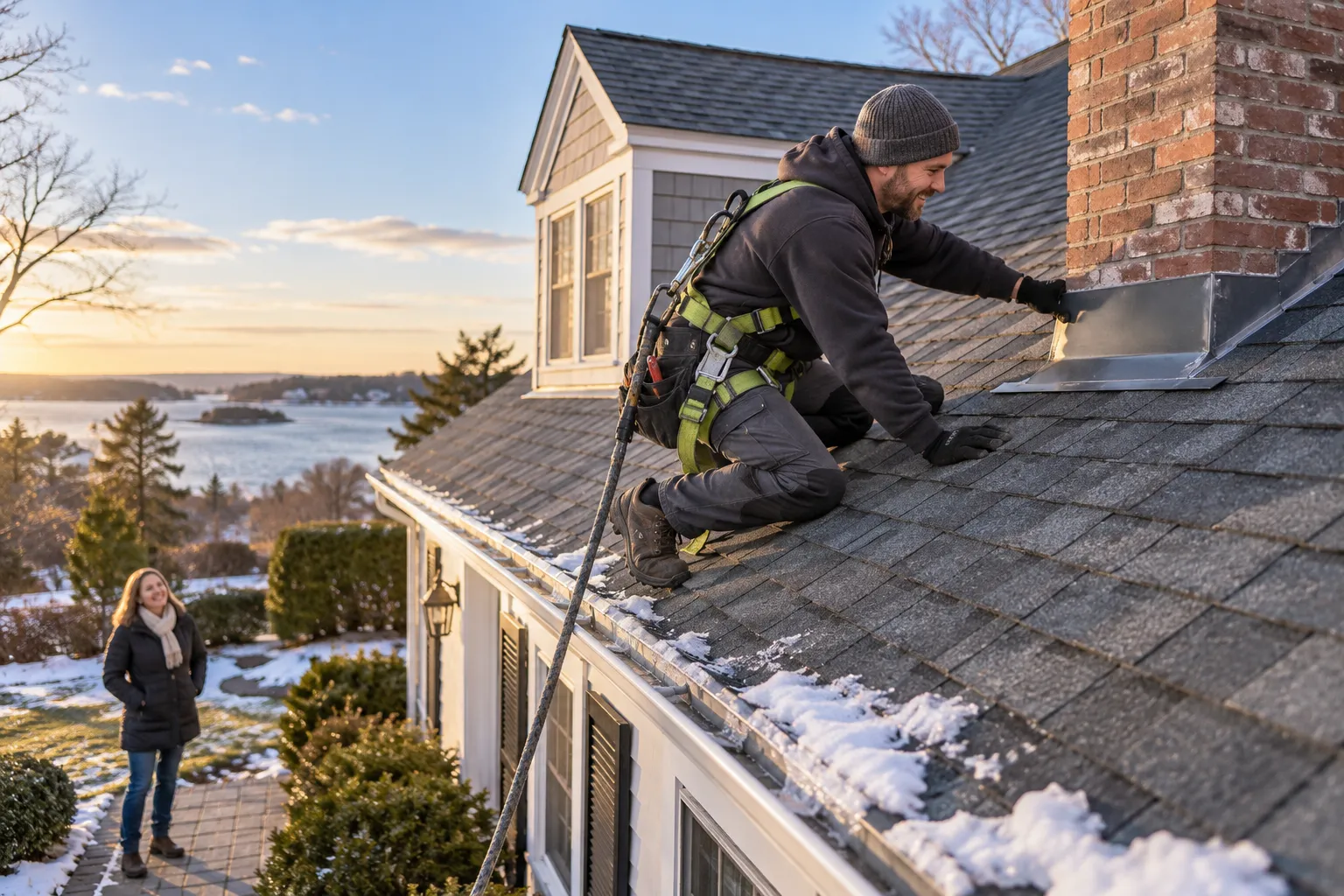
A roof does hard work in the Stamford area. Snow sits on it. Ice pries at it. Spring melt and coastal storms test every seam. Over time, shingles crack, flashing (the metal strips at edges and joints) loosens, and water finds a way in.
Cancomplex Roofing is a referral service. We do not fix roofs. We match your request with independent local roofing providers in our network. They look at the damage, explain the options, and give you a written quote. This page shows what repairs involve, how the seasons affect timing, and how to pick a provider who fits your week.
See a stain on the ceiling? Hear dripping in the attic? Water is getting in. Act early.
Move items out of the drip zone. Set a bucket under the leak. Take photos of the damage. Then ask a provider to look at the roof. Emergency roof repair may be needed if water is coming in fast, and many providers can respond quickly. Availability varies, so ask.
Keep off a wet or icy roof. A fall is a bigger risk than a leak. If a ceiling bulges with water, keep people out of that room. If you see sagging, sparks, or a light fixture filling with water, turn off power to that area.
Water is patient. It soaks the wood under your shingles. It wets the insulation. It feeds mold. Then it spreads along beams before you ever see a stain.
Older homes often have tight attics and old wood. A slow leak can hide there for months. A small fix now often costs less than a big fix later.
Plan around the weather. It affects what a provider can do and when.
Shingle glue needs mild air to seal. Cold, wet or windy days can limit the work. That is why timing matters. A quick patch may be possible now, while a larger repair may wait for a dry spell.
Heavy snow adds weight. Ice can form a dam, which is a ridge of ice at the roof edge. Melting water backs up behind it and slips under shingles.
In deep cold, providers often focus on stopping leaks and making things safe. Bigger repairs may wait for milder days.
Snowmelt shows you every weak spot. A stain that appears in March tells you where to look. Spring is a good time to book a check, because you can see what winter did.
Wind can lift shingles. Flying branches can punch holes. Storm damage repair often starts with a tarp (a heavy cover) to keep rain out. Permanent work follows once the weather settles.
Most repairs fall into a few groups:
The wet spot on your ceiling is rarely under the hole. Water runs along rafters before it drips.
A provider usually checks the attic first. They look for damp wood, dark stains and daylight. Then they walk the roof and check flashing, vents, valleys and nail lines. Some use a hose test to copy rain. Ask them to show you photos of what they find.
Repair makes sense when damage is small and the rest of the roof is sound. Replacement may make sense when leaks keep returning, shingles are brittle, or damage covers large areas.
Hail can bruise shingles in ways that are hard to see from the ground. If damage is wide, hail damage roof replacement may be the more sensible path. Ask the provider to explain both options in writing.
Some steps buy you time. They are not a cure.
Skip DIY roof work in rain, ice or wind. Let a provider handle it.
Asphalt shingles are common on Cape Cod style and older homes. Repairs are usually simple. Metal roofs need the right fasteners and sealants. Flat roofs on multi-family buildings need membrane patches and good drainage. Slate and tile need care, because they crack when walked on. Ask whether the provider has handled your roof type.
Busy home? Say so. Ask for a start time that suits school runs and work calls. Ask where the crew will park and where debris will go. Most repairs are short. Larger jobs can be planned around your schedule, weather permitting.
Local roofing contractors know how nearby weather treats a roof. Look for these:
Compare more than one quote when you can. Some policies may cover sudden damage, so check yours. Providers can often help document damage for a claim.
A provider looks in the attic and on the roof to find where water really enters.
Cracked, curled or missing shingles get replaced to restore the roof surface.
Metal strips and vent seals around chimneys and pipes are sealed or replaced when worn.
After wind or hail, providers can cover openings, repair damage, and help document it for a claim.
Prices vary by roof type, height, damage, and the season. These are typical U.S. ranges only. Hidden wood damage can raise the total, so always get a written quote before work begins.
| Repair type | Typical range | Notes |
|---|---|---|
| Replace a few shingles | $150 – $500 | Small jobs often have a minimum charge |
| Flashing repair | $200 – $800 | Chimneys and walls take more time |
| Vent pipe seal | $150 – $450 | Rubber seals wear out over time |
| Leak repair, small area | $300 – $1,200 | Depends on how hard the source is to find |
| Roof deck section repair | $500 – $2,500 | Needed when wood is soft or rotted |
| Emergency tarp | $250 – $1,000 | Short-term cover until repairs can be made |
Tell us about the leak or damage. Add photos if you have them, and note your schedule.
Cancomplex Roofing passes your request to independent roofing providers in our network who serve your area.
The provider inspects and gives a written quote. Ask questions and compare if you wish.
Choose a date that fits your week and the weather. The provider does the work.
Cancomplex Roofing explains roof terms in simple words, so you know what a provider is telling you.
Requests go to independent providers who work in your area.
Timing advice reflects snow, ice, spring melt, and storms in your area.
You request an estimate and decide for yourself. There is no obligation.
Small, local damage like a few lost shingles or a worn seal usually points to repair. Leaks that keep returning, brittle shingles, or damage across large areas may mean replacement. A provider can inspect and explain both options in writing.
Often a provider can stop the leak or cover the opening, even in cold weather. Some repairs, like sealing shingles, work better in milder weather. Ask the provider what can be done now and what should wait.
Some policies may cover sudden damage, such as from a storm. Wear and age are often not covered. Check your policy, and ask a provider to help document the damage for a claim.
Tell us about your roof. Request an estimate and a local provider will reach out. Questions first? Send a note to contact@cancomplex.world.
No obligation